The Sasaki Archive佐々木承周 老師アーカイブ |
Joshu Roku™ - 承周錄 | |||
| The sayings and doings of Joshu Sasaki | ||||
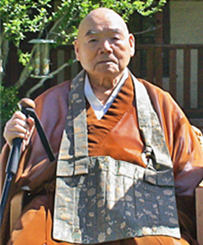 "I 'suffered Roshi's abuse' – and it was the closest I ever got to god." |
|||||||||||
| A female student. | |||||||||||
“He has become a precious golden Buddha!” |
|||||||||||
|
Eshin Godfrey |
|||||||||||
|
|||||||||||

| ENTRIES: 121 | DOCUMENTS: 116 | PAGES: 350 | VIDEOS: 3 | AUDIOS: 2 | HTMLs: 0 |
|
|
|||||
| Page 1 | Page 2 | Page 3 |
| 1 - 50 | 51 - 100 | 101 - 150 |
| 1969-2013 | 2013-2014 | 2014-2015 |
 |
 |
Index numbers are not static and do change.
X↓
日付
ビューにファイル名をクリックしてください:
概要
注釈

20140131_Rinzaiji_Info.pdf
Dear Friends,
Warm greetings from the Boards of Directors and Administrative Abbots of Rinzai-ji and the Mount Baldy Zen Center.
As you may know, we are in a time of transition. We’d like to use this opportunity to connect with you and share some of the work that different members of our sangha have undertaken this past year.
"Of the 9 callers directly contacting An Olive Branch, two calls were from individuals who experienced distress on reading allegations of Sasaki Roshi’s sexual misconduct on the Internet. They were provided listening by the Listening Council and felt sufficiently resolved. They did not report harm of a sexual nature from Sasaki Roshi or from others within the sangha. One individual made a report of perceived homophobia within the sangha, asked to speak to a specific osho and was referred to that osho. Three individuals made anonymous reports that were not specific in nature and with which the individuals decided not to proceed. One individual made a report regarding other reporters of harm, was a former member of the sangha and was provided listening by members of the Listening Council. The last two reports were made by individuals who did not feel harmed by Roshi, but felt harmed by the sangha in general and/or specific oshos. They had specific recommendations for changes in practice formats. These specific suggestions included listening circles and healing circles for reporters of harm. Other suggestions included changing the practice of Rinzai-ji to be more inclusive of women, to provide women with leadership positions and to have monthly sange (repentance) ceremonies."
"To date, An Olive Branch has been paid $10,282.50 from the funds allotted for this service. There have been no reports since October and no billing since the end of September. Rinzai-ji, the Mount Baldy Zen Center, the Bearing Witness group, and the Listening Council members continue to remain completely open to this process for as long as necessary."
Eshu Martin.pdf
Facebook post of:
February 7, 2014
"You know, it's the damndest thing. If you set up a 'listening council' made up entirely of members of an abusive organization, refuse to even tell people who those members are, and then ask the victims of your organization's abuse to come forward and tell you all about it, entirely for the benefit of your organization, you aren't going to hear a damn thing. I think that taking this to indicate that there is nothing to report is the pinnacle of self deception. Please note the repeated use of the term 'administrative abbot(s)'. In Rinzaiji speak this implies 'subservient to the actual abbot, Joshu Sasaki, Roshi', who is, as I have pointed out before, still absolutely at the helm of Rinzaiji. I also find it totally odd that the person paying (ie. the contractor) for the services of An Olive Branch is Joshu Sasaki himself, this is repeated in the message so it is being emphasized. Again as I have pointed out before, this means that An Olive Branch is the employee of Joshu Sasaki himself, and is simultaneously to help the organization find it's ethical feet AND make him happy about it. How totally lost can you be?"

20140211_Puget_Sound_Zen.pdf
PSZC Sangha:
We've been monitoring developments at Rinzai-ji since November 2012, when we were informed about Joshu Sasaki's abuses of power. Thank you to all of you who have attended the sangha meetings we've held over the last year about this issue, and who've shared your thoughts with us.
We have decided to end PSZC's affiliation with Rinzai-ji. We sent this letter last week to Rinzai-ji's Board of Directors and its Administrative Abbots.
Please contact us with questions or comments-if you reply to this email your comments should reach all of us.
The PSZC Board of Directors
"In November 2012 when we were informed of Joshu Sasaki’s abuses of power, we decided to work toward better integrating our core values into our operations as a Zen Center. In the last year, we've created a teacher contract for our Abbot, a teacher ethics policy, and a standing ethics committee. We are in the process of establishing a voting membership which will have the authority to approve board members and to hire and remove teachers."
"We had hoped that Rinzai-ji, Inc. would reflect, grow, and change in response to the events involving Joshu Sasaki. We do not feel that this has happened. Rinzai-ji, Inc has not issued a statement condemning his behavior, and has not issued an apology for his behavior. Rinzai-ji Inc. has not removed him from a leadership position and continues to operate under his directives. It is unclear to us to whom he is accountable, and who has the authority to accomplish needed changes to the culture and management of Rinzai-ji, Inc."
"Because of this lack of alignment with our values and our practices as a community, with a heavy heart, we choose to end our affiliation with Rinzai-ji Inc. This is a weighty decision for us. Several members of our sangha, including our Abbot, his wife, and our lay teacher, have studied and trained with Joshu Sasaki, and many in our sangha have been profoundly affected by his teachings."

20140223_lunamoth.pdf

A comment on the article “A Zen Woman’s Personal Perspective on Sexual Groping, Sexual Harassment, and Other Abuses in Zen Centers” By Grace Schireson on Sweeping Zen.
[LINK]
lunamoth
February 23, 2014 at 2:45 am
lunamoth is a pseudonym for Ann Diamond - Montreal, Quebec. Ann Diamond is the author of "My Cold War"
From her website: www.anndiamond.net
|
Once upon a time...
|
|
After the Great Darkness
Came the Cold War... |
'Without their knowledge or consent, thousands of Canadians were chosen to be part of secret experiments conducted in the interests of our "National Security.Minds and lives were destroyed, communities devastated as our towns and cities became living laboratories for cynical research designed to enslave human beings and sabotage their future.We are living in the aftermath of a Cold War waged by our governments on their own people.This is story of one family.
|
“I was a student of Roshi from 1983 to 1996. I trained at Mount Baldy, Bodhi Mandala,[sic] and Rinzai-ji, but even before I met the Roshi, I had talked to him in whatever place of non-being we all travel to when our bodies are sleeping, and therefore on meeting him for the first time in the sanzen room at Mount Baldy, there was a sense that I was embracing a part of myself, someone I already knew and wanted to know more of. That first time, he seemed like a giant, someone very ancient, dressed in shining brocade robes and giving off light. He banged his stick on the floor and asked me a question and I forget what happened, but it was like seeing stars. The second time I saw him in sanzen, however, he struck me as much more ordinary and considerably smaller, while his robes looked frayed and faded. I never recaptured that initial impression of magnificence, or that feeling of entering the koan and answering it all in the same instant.”
“I don’t remember the first time he groped in my robes, or the second or third. I barely even noticed. I certainly didn’t feel threatened or traumatized. The zendo could also be a pretty sexy place and I had begun to feel sorry for this old man who had to sit there day after day dealing with one student after another, many of them as wildly confused as I was. Maybe by ‘sorry’ I mean I felt empathy or compassion. I wanted to change and grow — that’s why I was there. It seemed to me there was something to learn even from his fumbling attempts to get ‘sexual’ in sanzen. I used to laugh about it, then and there. He had to be joking. Maybe he was lonely. Maybe he was afraid of getting old. It seemed like his problem, not mine, and it made absolutely no difference to my practice during those years. What mattered was my effort and commitment, and the teaching I was getting.”
An email received:
Steve Dickinson March 2, 2014 8:13PM
To: sasaki.archive@gmail.com
Sadly liberating
“I was a (gratefully) failed lay student of Roshi Sasaki at Mt. Baldy Zen Center from 1971-1983. During those years I always took the silent, no eye-contact atmosphere as part of the typical ego-busting regimen one was to expect from what can arguably called an anachronistic and ethnocentric machine of monastic-style Zen training, shrouded in Eastern mists, further obfuscated by a foreign tongue.”
“As years passed, and I began to see that Zen, though a powerful vehicle, can sometimes be an incomplete one, allowing for the walling off and denying/fragmenting parts of the individual psyche. The Mt. Baldy setting back then seemed to attract a type of Westerner that somehow learned to thrive behind that sanctioned form of non-communication. I recently heard the term ‘Zen Nazis’ in reference to stereotypical American practitioners and was at once transported back to those days at Baldy.”
Letter from Bodhi Manda trustees
to
Denkyo Kyozan Joshu Sasaki
Letter from Denkyo Kyozan Joshu Sasaki
to
The Bodhi Manda Community
Letter from Seiju Bob Mammoser
to
nine Rinzai-ji Oshos
Letter from Bodhi Manda trustees
to
Denkyo Kyozan Joshu Sasaki
Denkyo Kyozan Joshu Sasaki
to
Bodhi Manda trustees
Letter from Roshi to the putative trustees indicating that this is his final communication with them and agreeing to a meeting between the putative trustees and Roshi's representatives. Also in this letter:
*a)* Roshi exercises his authority under the Bodhi Manda By-laws as Chief Abbot of Rinzai-ji to appoint Seido Larry Clark as Abbot of Bodhi Manda and Seiun Stephen Quintero and Oren Beth Schaefer as Vice-Abbots.
*b)* Roshi states that he expects Bodhi Manda to have a larger board and to follow its own By-laws and Guidelines which state: *"It is recognized that the Board of Trustees is not competent to make decisions on spiritual matters and matters relating to practice. Those decisions are delegated, under the Bylaws, to the Abbot of Bodhi Mandala Zen Center, and ultimately to the Chief Abbot of Rinzai-ji, Incorporated…. The Board of Trustees functions primarily in areas of planning, budgeting, and financial control….."*
*c)* Roshi directly addresses Seiju and Christiane: *"Seiju: Are you willing to make harmony with Rinzai-ji sangha now? If you still attach to your old thinking then leave Rinzai-ji completely. Christiane: Please don’t forget to complete a transition with Seido. If you are still attached to your thinking then leave Rinzai-ji completely."*
*d)* Roshi entrusts his three representatives to resolve any remaining issues with Bodhi Manda because he is too old and tired.
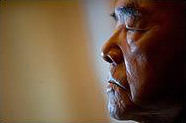
The Death
Of
Kyozan Joshu Sasaki
http://en.wikipedia.org/wiki/Kyozan_Joshu_Sasaki
Kyozan Joshu Sasaki
From Wikipedia, the free encyclopedia
|
Born |
April 1, 1907 |
|
Died |
July 27, 2014 (age 107) |

SasakiDeathSS.pdf
Shambhala
SunSpace
July 28, 2014
Joshu Sasaki Roshi
dead at 107
"From Myoren Yasukawa & Gento Krieger of Rinzai-Ji Zen Center, the home temple of Joshu Sasaki Roshi, comes this message:"
"It is with a heavy heart that we inform you that Joshu Sasaki Roshi passed away at 4:25 p.m. [Sunday] afternoon at Cedars Sinai Hospital in Los Angeles. We will update you soon with funeral arrangements."
"Born in Japan in 1907, Sasaki would study and practice Zen Buddhism there until he left for America in 1962. In 1963 the Rinzai Zen Dojo Association, of which he was a founding member, was formed. This would soon become known as Rinzai-ji, Inc., and its first property, Cimarron Zen Center in Los Angeles, would become known as Rinzai-ji. Mount Baldy Zen Center in Los Angeles, where most of Rinzai-ji’s students have done their training, would form in 1970 and become Sasaki Roshi’s home."
"In recent years, the Rinzai-ji community was fractured by numerous allegations toward Sasaki of sexual impropriety."
LATimes SasakiDeath.pdf
L.A. TIMES
Joshu Sasaki Roshi, who brought Zen Buddhism to U.S., dies at 107
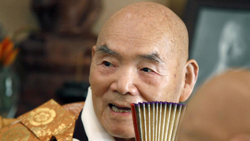
Joshu Sasaki Roshi celebrates his 50th anniversary at Rinzai-ji Zen Center in Los Angeles in 2012. (Irfan Khan / Los Angeles Times)
By Christine Mai-Duc
"Joshu Sasaki Roshi, American Zen master with complicated legacy, dies at 107"
"Buddhist teacher Joshu Sasaki Roshi, a leading figure in Zen Buddhism in America whose legacy was later complicated by allegations of sexual abuse, has died. He was 107."
"Roshi died Sunday afternoon at Cedars-Sinai Medical Center, said Gento Steve Krieger, head monk at Rinzai-ji, also known as the Cimarron Zen Center, in Jefferson Park. He died of complications of old age, Krieger said."
"He was a Zen master. I don't know anybody else who lives that completely and that fully. - Gento Steve Krieger, head monk at Rinzai-ji"

20140731_SF_New_Mexican.pdf
SANTA FE + NEW MEXICAN
Joshu Sasaki Roshi,
1907-2014: Zen master mired in sex scandal spent decades shielded by loyal students
Posted: Thursday, July 31, 2014 8:00 pm I Updated: 11:09 pm, Thu Jul 31, 2014.
By Steve Terrell
The New Mexican
"Joshu Sasaki Roshi, a 107-year-old Japanese immigrant who had taught a strict form of Zen Buddhism in Jemez Springs, died Sunday at Cedars-Sinai Medical Center in Los Angeles of age-related causes."
"Sasaki Roshi, who had taught at the Bodhi Manda Zen Center in Jemez Springs beginning in the early 1970s, and also at a Zen center in Mount Baldy, Calif., became one of the most influential Zen masters in the U.S., but in the last years of his life, he became mired in a sex scandal. Dozens of female students and attendants had accused him of fondling them and, in some cases, manipulating them into having sex with him."
"Though no charges were ever filed, Sasaki Roshi's organization apologized for not dealing with their teacher's sexual behavior."
"According to the website of the Mount Baldy Zen Center, Sasaki Roshi was born in 1907 in rural Japan. He became a novice at the age of 14 in the Rinzai tradition of Zen Buddhism."
"The Bodhi Manda website says Sasaki Roshi came to America in 1962, 'when a group of people in Los Angeles asked Myoshin-ji, Japan's largest Rinzai school, to send a teacher. With interest in Buddhism growing in North America, a Zen community steadily flourished around him.' He began teaching at the Jemez Springs center in 1973."
"Officials at Bodhi Manda couldn't be reached for comment."

20140801_Buddhist_Christian.pdf
The Buddhist Christian
A blog that examines the spiritual journey of a Christian pastor who discovered over a decade ago that his Christian spiritual walk was greatly enhanced by the influence of Buddhism.
Friday, August 1, 2014
The Death of Joshu Sasaki
"Zen fraud (not a master, in my opinion) Joshu Sasaki is dead at 107. He leaves behind him a legacy that includes sexually assaulting the female students in the interview room - perhaps all of them - ......"
"If there is a lesson to be drawn from this it is that we must not place our spiritual teachers, no matter the tradition, on a pedestal. Once we encourage people to believe that the teacher is fully enlightened, or a guru who has already finished the journey and is just hanging around for our benefit, or that the guru IS the Buddha, or that the priest IS Christ, we open the door for unscrupulous men like Sasaki to destroy lives in the name of religion and spirituality."
"Perhaps we can only judge if people are fully enlightened in retrospect. Certainly Christ, Buddha, Muhammad, Moses, Elijah, and the other founders of the great traditions were. We can argue that some more recent teachers who have transitioned this life were as well, including some of the Hindu adepts, Dr. King, Thomas Merton, many of the Saints of the Christian tradition, and so on. Being fully enlightened isn't about never making a mistake in life, because as we move toward enlightenment we are going to make mistakes. Surely, however, an unrepentant serial sexual assault perpetrator can safely be said to have never seen the light. How much safer would we be to postpone judgment on enlightenment until people have passed, and instead settle for Lama Surya Das' answer to the enlightenment question when it was posed to him on 'Buddha at the Gas Pump?' He answered, "I am enlightened enough for now." Refusing to join the many teachers today who claim full enlightenment to prop up dubious teaching legacies consisting mostly of plagiarisms, yet acknowledging some progress on the path, Das' honesty is to be commended in a world full of self promoting charlatans. Sasaki seems in part to have gotten away with his crimes because people were only too willing to see him as enlightened and therefore give him carte blanche to do whatever he wanted - and what he did was cause great damage."
"Even Tricycle Magazine is complicit in supporting his crimes, refusing to be honest and call him what he was - a horrible criminal surrounded by conspirators before and after the fact in the name of the Dharma. How sad. How strikingly unenlightened. How criminal in that they, too, continue the cover up."

20140806_NYT_Obit.pdf
OBITUARY
Influential Zen master Joshu Sasaki's
legacy was tainted by scandal
PAUL VITELLO
The New York Times News Service
Published Wednesday, Aug. 06 2014, 5:10 PM EDT
Last updated Saturday, Aug. 30 2014
“…. In 2012, in his centenarian years, a tide of sex-abuse allegations emerged to cast his character and his legacy In a harsh light.”
“On website discussion boards, former students began voicing what turned out to be long-festering complaints about Mr. Sasaki, accusing him of engaging in sexual affairs with female students and Buddhist nuns, of molesting or coercing hundreds of others into having sexual contact with him during one-on-one training sessions at his Rinzai-JI Zen Center In Los Angeles and at his retreat camps. They said he would tell them that sexual contact with a Zen master, or roshi, like him, would help them attain new levels of ‘non-attachment,’ one of Zen's central objectives. If they resisted, they said, he used Intimidation and threats of expulsion.”
“An Independent panel of Buddhist leaders concluded in 2013 that the allegations were essentially indisputable. The panel's report said students had complained to Mr. Sasaki's staff about his behaviour since the early 1970s, and that those ‘who chose to speak out were silenced, exiled, ridiculed or otherwise punished.’ A few women went to the law enforcement authorities over the years, and one had contacted a rape-crisis centre, but no charges were ever brought against Mr. Sasaki, the panel noted.”
“Mr. Sasaki had retired from teaching a year before the allegations surfaced. Although he kept his tide as abbot of the Rinzai-JI Zen Center until 2013, he never publicly responded to the charges.”
“However, a group of his senior staff members issued an open letter of apology, acknowledging that they had known about his behaviour and had made only intermittent efforts to address it. ‘Our hearts were not firm enough, our minds were not clear enough,’ the letter said.”
“Not all of his adherents concurred In the apology. Some contended that the allegations had been investigated only superficially, or pointed out that no criminal charges were filed. On websites and online message boards for Zen Buddhists, some argued that even if the allegations were true. Mr. Sasaki would never have acted deceptively or with intent to cause harm.”
" 'The Idea that he was a predator is mistaken,' said Harold Roth, a professor of religious studies at Brown University In Rhode Island and a former student of Mr. Sasaki. ‘Everything he did was In the devoted service of awakening enlightenment In his students.’ "
“Prof. Roth, Who is director of a contemplative studies Initiative at Brown and edited an upcoming first volume of Mr. Sasaki's collected teachings, said Mr. Sasaki had never been well-schooled in shifting mores about sexual behaviour. Referring to Japan's last feudal period, from the 17th to the 19th centuries, he called Mr. Sasaki ‘a man of the Tokugawa era.’ “
"Correction: August 14, 2014
An obituary last Thursday about the Zen master Joshu Sasaki referred incorrectly to the poets Gary Snyder and Allen Ginsberg. While they both studied Zen Buddhism, they did not study with Mr. Sasaki."
"Correction: August 30, 2014
An obituary on Aug. 7 about Joshu Sasaki, a popular Zen master who was accused of repeated instances of sexual abuse though never tried, characterized imprecisely the views of Harold D. Roth, a religious studies professor at Brown University and the editor of a volume of Mr. Sasaki’s teachings. Though Dr. Roth questioned allegations that Mr. Sasaki had been 'a predator,' as he put it, he was not among those who argued, as the obituary said, 'that even if the allegations were true, Mr. Sasaki would never have acted deceptively or with intent to cause harm,' perhaps suggesting that Dr. Roth would have excused such behavior. In addition, the obituary erroneously merged two fragments of quotations by Dr. Roth: 'everything' and 'devoted service of awakening enlightenment in his students.' He did not say of Mr. Sasaki, 'Everything he did was in the devoted service of awakening enlightenment in his students.' ”
Strategic and Operational Plan for Bodhi Manda
"In general a strategic and operational plan for Bodhi Manda calls for leadership in the spiritual and practice life, in organizing and working with a community, and in practical matters such as caring for the buildings and grounds, hosting groups and motel guests, and managing finances."
Subject: |
Fwd: Healing and Envisioning Retreat |
Date: |
Thu, 9 Oct 2014 14:10:13 -0600 |
From: |
BMZC Office <office@bmzc.org> |
To: |
undisclosed-recipients:; |
“The Bodhi Mandala [sic] Zen Center is holding a retreat for sangha members who feel they were harmed while practicing at Bodhi. We need your help to inform people who may have such feelings. Please pass along information about the retreat to them, or send us their contact information so we can reach them.”
“The current leadership team of the Bodhi Manda Zen Center invite you to participate in a Healing and Envisioning Retreat. Each of us on the leadership team recognize that this past year has been a tumultuous time for the Bodhi and the entire membership of our sangha. This is a unique moment in the Bodhi’s history, and with the passing of Joshu Roshi in July, it is also the end of an era. This is a exciting opportunity for the Bodhi to grow in a fresh new direction. The Board and our Director recognize that a new direction is possible only if we first acknowledge the sangha’s suffering.”
“The Bodhi sangha deeply values the teachings and practice tradition Roshi has given us. The Roshi has also left a history of sangha suffering that has never been acknowledged or addressed. Late recognition of this history will not in itself bring relief. However, we hope that healing and a bright future for the Bodhi are possible for all of us. The Board is offering to the entire sangha a Healing and Envisioning Retreat at the Bodhi November 21st – 23rd, 2015 [sic]. The retreat sessions, which will occur on Saturday, November 22nd and Sunday morning November 23rd will be facilitated by Kathleen Oweegon of Bridges of Peace. Kathleen is an experienced facilitator and mediator whose website, www.bridgesofpeace.com; (paste this link in your web browser) is available if you wish further information about her.”
Letter from Dick Boyle
to
Bodhi Manda Zen Center BOD
"So let me, in my systematic way, apply 'healing' and 'envisioning' in turn to the two kinds of suffering."
"1. Healing the suffering from sexual abuse. That seems to be the major focus of the retreat. As a male what is proposed sounds fine to me. Women may want to contribute their own comments."
"2. Envisioning a future free from sexual abuse. The invitation to the retreat states that 'the leadership is committed to ensuring that inappropriate behavior is never allowed in our future,' and I’m sure that is true. However, there is a matter which should be addressed more directly. After participants 'share their experiences, trauma and suffering,' comes the phrase 'which all of us may acknowledge and, as appropriate, accept responsibility for.' While all of us who were members of the sangha should probably accept passive responsibility (whether we knew what was going on or not), we all know that the present BMZC leadership was actively involved in covering up Roshi’s abuse and allowing it to continue. It would be much healthier to have a public apology for that past behavior. I can only speak for myself here, but you are my friends and only you know why you acted the way you did. I would like to forgive and move forward, but first I need you to ask for forgiveness."
"3. Healing the suffering caused by fracturing the sangha. The best way to deal with this is to correct the conditions that have caused the problems. The specific, proximal cause, of course, was Roshi’s sexual abuse. Conflicts of one kind or another will always happen in communities, but some mechanisms for resolving them work better than others. It has been part of the legacy of Rinzai-ji to have autocratic leadership, which makes any kind of compromise or movement toward shared understanding difficult. So any real healing of the sangha is going to have to include a clear resolve to put an end to autocratic leadership. A good start toward this would be for the leadership to not only admit their past mistakes but also offer to resign their current positions of leadership. I personally would be in favor of keeping them in office. But a public offer to resign would signify a clear break with the past. It would also be ideal preparation for the next topic, envisioning the future."
"4. Envisioning the future of the New Mexico sangha. One obvious problem with accepting the resignations of the present leadership is that there is no mechanism for replacing them. If we are going to have any sort of democratic process, we need to be able to identify an electorate. Big topic for discussion! My suggestion is to open membership in Bodhi to those who pay annual fees, let them elect the Board, let the Board choose the Director/Abbot. Something like that. It will take awhile to work out the details, but the retreat should provide a commitment to starting the process."

20141111_Rangler_Boyle.pdf
Date: November 17, 2014 at 10:25:34 PM EST
"I should also admit that I think what I say about the dangers of authority structures in which power is concentrated at the top are especially relevant today for Western Buddhism. So much growth, so much fresh territory, so many new teachers starting up new centers everywhere. I’m going to try to distill these emails into something for publication. But that will take awhile, and lack the poignancy of what has happen here in New Mexico."
20140628_MU_News.pdf
28 page document
The MU News
by "Jushin" Ted Seaman
email: motion.rest@gmail.com
Saturday, June 28, 2014
Joshu Sasaki, Mt. Baldy Troubles
http://themunews.blogspot.com/2014/06/joshu-sasaki-mt-baldy-troubles.html
“Writing about Zen is a very difficult thing – especially if you are writing about teachers like Mr. Sasaki and Mr. Shimano. It is difficult because the voices in the Zen community are so intensely polar. Zen students see the holders of the Zen form as sparkling icons of spiritual purity, albeit with occasional, forgivable failings. Detractors, usually ex-students, express such vitriol at their perceived betrayal that they can barely articulate what it is they are trying to say. Amidst the cool stoicism of the greater Zen community, such erratic behavior doesn’t help their cause. They are dismissed, labeled as ‘troubled’, or cast out.”
“The two sides are therefore so far apart that there is no real communication between them.”
“Regarding Mr. Sasaki, I have to say up front: I am a detractor.”
"But before I tell the story of my time at Bodhi Manda and Mt. Baldy, I’d like to express my thoughts on this gap – the one that I have just described. I admit that I have a measure of personal pain wrapped up in my Zen experience. I’ve backed away from a lot of people who were once very close friends. I feel a weight that comes up during conversations like the one at the beginning of this post. I have had hundreds of such conversations – literally hundreds. It is painful for me to say good-bye in this particular manner. Some years ago, I gave up on the idea that that communicating with Zen people was even possible – at least, when the subject of Zen comes up."
|
|
Statement on "Fair Use"
According to the “Fair Use” clause of International Copyright Law, the author declares that the use of the photos/images/audio/video/information in this academic/reference/scholarly work is for purposes of “criticism, comment, news reporting, teaching, scholarship, or research” according to 17 U.S.C. § 107. - Limitations on exclusive rights: Fair use, U.S. Copyright Code. The resulting work on The Sasaki Archive is a creative endeavor with value added through unique and original selection/arrangement of factual material and information, critique, expression, and classification of information.
Periodically the entries may be collated into chronological order.
Please – Survivors, present and former Rinzai-Ji oshos, clergy, students, Board members – contact us. We guarantee strict confidentiality; nothing we are sent or told will be made public without a prior understanding and agreement. Your identity will be protected as you wish. All emails, letters, correspondence and any transmitted documents are encrypted and stored at a secure, off-site location.
We want to hear and document your experiences so that the truth prevails and is not overshadowed by hagiographical hyperbole and self-serving historical revisionism. Only by telling our stories and exposing our injuries can others see the truth, our stories can save others from needless injury and suffering. Please come forward, if only anonymously….
We are able to offer referals to psychological professionals and legal professionals for survivors.
We are always seeking old copies of the Rinzai-Ji Newsletters, announcements, brochures, letters, documents and internal documentary materials. If you have any such material please donate them so that we can build on this real transparent historical record.
Everyone benefits from reporting any errors, malfunctions or irregularities encountered
in the database. Please drop us a note pointing to any difficulty.
You may make contact through: sasaki.archive@gmail.com
or by mail at:
The Sasaki Archive Project
Post Office Box 213
Sedgwick, Maine 04676
(207) 359-2555
| End of page 3
Last Page |
||